- Evaluators read stacks of submissions that all make the same claims. Video shows what text can only claim.
- An EOI gets you on the shortlist. A tender wins one specific job. Each needs different footage.
- Keep a tender video to 60 to 120 seconds, caption it and put your strongest footage first.
- You cannot film a finished job being built. Start capturing current projects before the next tender lands.
Every submission says the same thing
Read a stack of construction tender submissions and a pattern appears. Every builder is committed to safety. Every builder has a proven track record. Every builder delivers quality, on time and on budget.
The evaluator reading them notices it too. When every response makes the same claims in the same words, the claims stop meaning much. What separates the shortlist from the rest is often not who has the better track record, but who shows it more clearly.
That is where a construction tender video earns its place. Sixty seconds of footage from a comparable job proves what three pages of text can only state: the scale you work at, how you run a site and the people who would run this one. If you already have footage of past projects, it is probably the most underused asset in your bid library. If you do not, it is exactly what our construction video production work is built to capture.
What evaluators score, and the footage that proves it
Every tender is different, but most construction evaluations come back to the same handful of questions. Each one has a type of footage that answers it better than words can.
| What they are asking | Footage that answers it |
|---|---|
| Relevant experience Have you done this kind of job before? | A short film of a comparable project, from early works to completion |
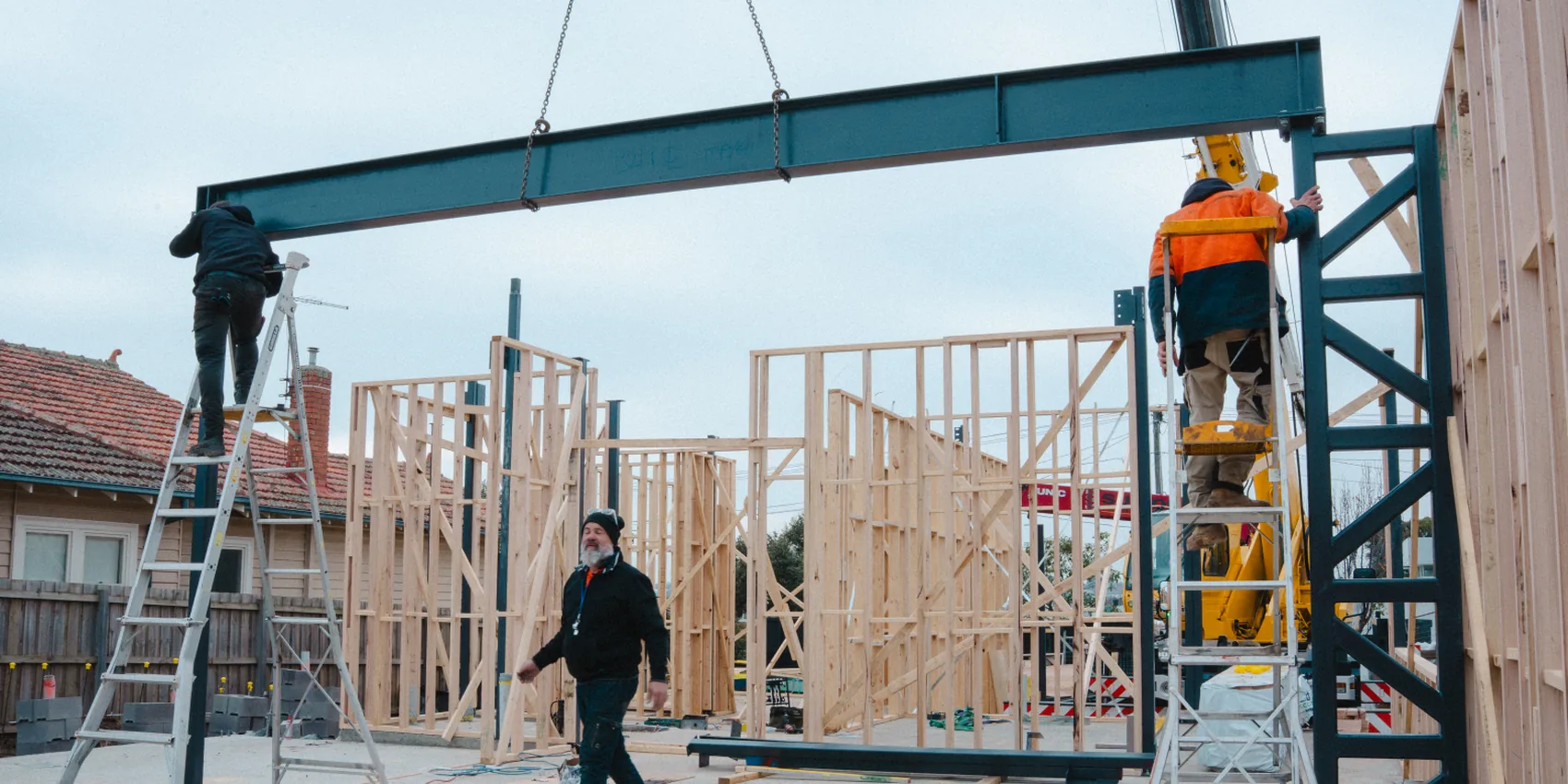
| Methodology How will you run this job? | Progress footage showing sequencing, staging and site logistics |
| Safety How do you manage risk on site? | Site controls, exclusion zones, PPE and inductions on camera |
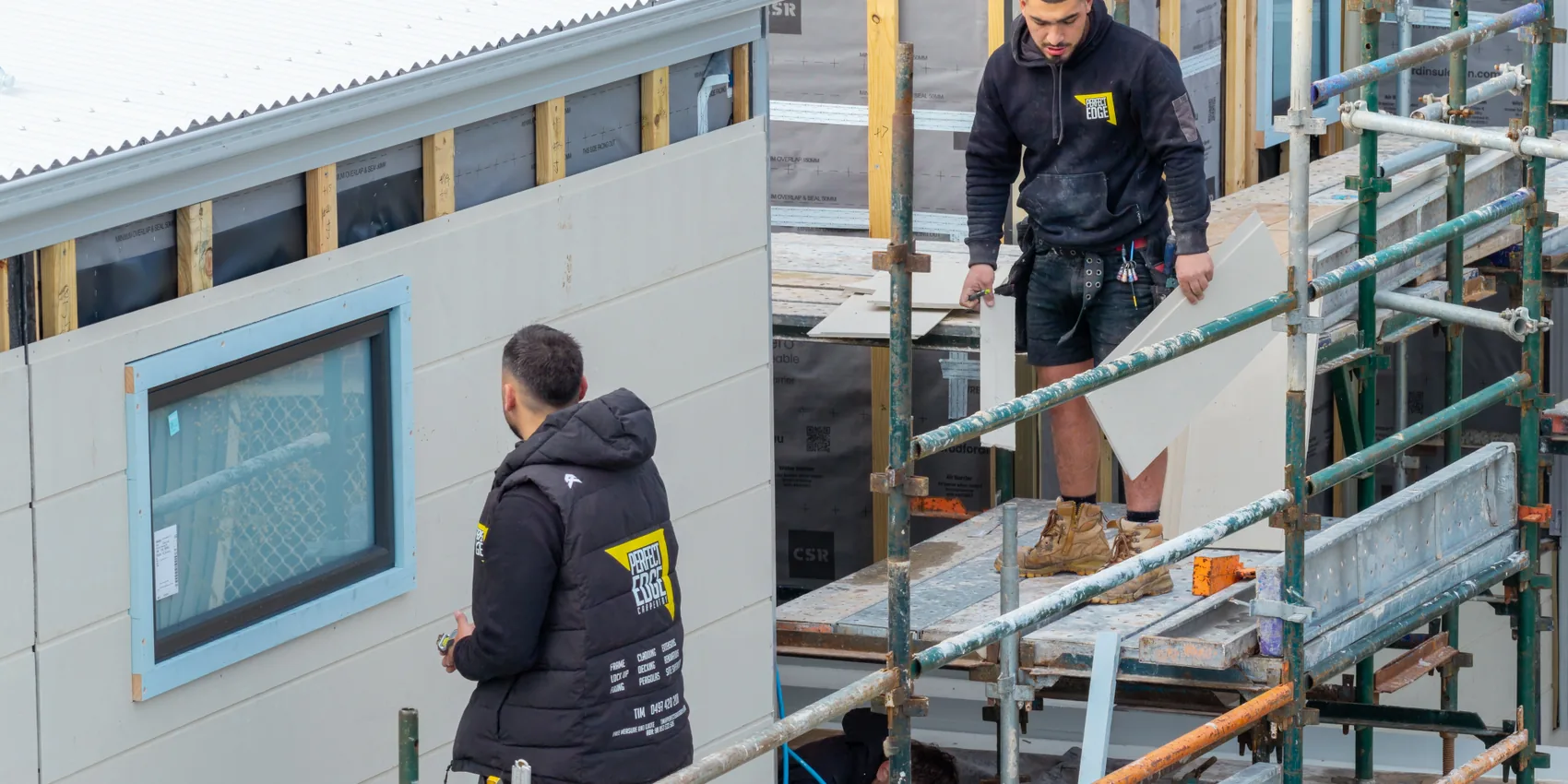
| Team and resources Who and what will be on site? | Your supervisors, crews and plant at work |
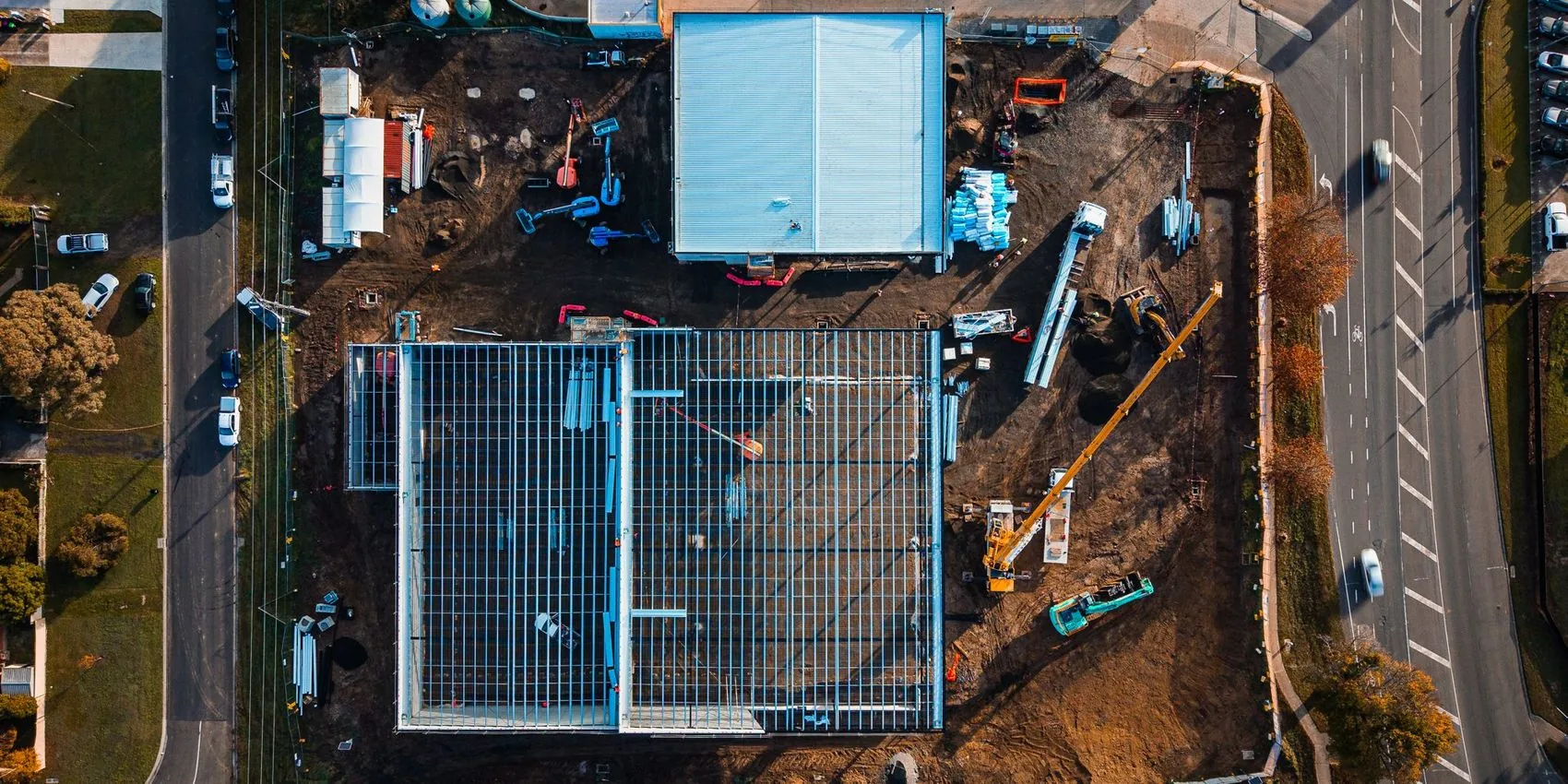
| Capacity Can you handle this scale? | Aerial footage showing the size of past jobs |
You do not need all five in one video. What you need is a library of footage to pull from, so each submission can show the evidence that particular evaluation is looking for.
Tender or EOI: what changes
An expression of interest and a tender ask different questions, so the video should change too.
Expressions of interest
An EOI is about getting on the shortlist. The client wants to know who you are, what you build and whether you are the right size for the project. Lead with a short capability video covering your sectors, your scale and two or three flagship jobs. Keep it broad.
Tenders
A tender is about winning one specific job. The evaluator wants proof you have done something like it before and a clear picture of how you would deliver it. Lead with footage of your most comparable project and use progress footage to back up your methodology. Keep it specific.
Prequalification and panel applications sit somewhere in between. A capability video plus a small set of project films usually covers it.
The construction capability video
A construction capability video is a short film that shows what your business can deliver. It is not about company history or a mission statement. It is about evidence. A strong one covers:
- The sectors and project types you work across
- The scale of your largest and most complex jobs
- How you run a site: sequencing, safety and coordination
- The people who would be running the client’s project
- Two or three flagship projects, shown being built rather than just finished
Aim for 60 to 120 seconds. Evaluators are busy and often review a pile of submissions in one sitting. Put your most impressive footage in the first ten seconds, because for some people that is all they will watch.
Company profile video or capability video?
The two terms get used as if they mean the same thing, but they do different jobs.
| Company profile video | Capability video | |
|---|---|---|
| Main question | Who are you? | What can you deliver? |
| Focus | Story, values, people and history | Projects, scale, methods and safety |
| Best for | Website, LinkedIn, recruitment and introductions | Tenders, EOIs and prequalification |
| Typical length | 2 to 3 minutes | 60 to 120 seconds |
A construction company profile video builds trust and works well on your website, LinkedIn and careers page. A capability video is the sharper tool for submissions. Most builders benefit from both, and both can usually be cut from the same footage. We cover how the different video types fit together in 5 types of video every construction company needs.
Adding video to a capability statement
Most tender portals were built for documents, not video. A few simple steps make sure your footage actually gets watched.
- Check the conditions first. Some tenders do not accept links or extra attachments outside the returnable schedules. Read the instructions before you build video into your response.
- Host it, then link it. Video files often go over portal upload limits. Host the video on a private or unlisted link, and make sure the link stays live for the whole evaluation period.
- Add a QR code. A capability statement video works best as a QR code placed next to the matching project, so anyone reading a PDF or a printed copy can watch it on their phone.
- Caption everything. Plenty of people watch with the sound off, especially in an office. Captions mean the message lands either way.
- Pull stills from the footage. Frames from your own video make far better images for the document than stock photos.
- Name it properly. A link or file titled with your company and the project type looks professional and is easy to find again.
A tender response tells the evaluator what you can do. Video shows them you have already done it.
What this looks like on Melbourne sites
These are recent Strum Media projects. Each one produced the kind of evidence that belongs in a tender or capability statement.
Clayton Business Park for Delta Group
A controlled induced collapse of a 27 metre high, 3,200 tonne High Bay Press Hall for client Goodman. The structure was 124 metres long, with around 1,200 tonnes of steel and a 2,000 tonne concrete mezzanine. Ground footage, aerials and photography captured the planning and the execution. For a demolition contractor bidding on complex industrial work, that is direct proof of capability. See the Clayton Business Park project.
West Gate Bridge for QEST Infrastructure
Removal of 1 km of membrane across both sides of the West Gate Bridge during a tight shutdown window, with more than 70 QEST staff working day and night shifts. The works were completed ahead of schedule with zero QEST delays and zero incidents. The coverage shows methodology, safety and coordination on live public infrastructure, which is exactly what evaluators look for. See the West Gate Bridge project.

Kia Kilmore and Hume Anglican Grammar for Profect1 Group
Video, photography, drone and FPV across a new commercial dealership build in Kilmore, plus full coverage of roofing works on a school development in Mickleham. Together they document a contractor growing across commercial and education work, which is the story a capability video needs to tell when a business is moving into larger projects. See the Kia Kilmore and Hume Anglican Grammar projects.
Start filming before the tender lands
The most common mistake with tender video is waiting until a tender is open. By then, the projects you want to show are finished, and there is no way to go back and film how they were built.
The better approach is to capture current jobs as they happen, at key stages from early works to handover. When the next tender or EOI arrives, the evidence is already sitting in your library. For most builds that means a handful of shoot days across the program, not a constant presence on site. We explain how to plan it in why every builder should be filming site progress.
Common questions
Can you include video in a construction tender?
Often, yes. Many tenders accept links or attachments, and EOIs and capability statements usually allow more freedom. Always check the tender conditions first, as some limit what can be submitted outside the returnable schedules.
How long should a tender video be?
Between 60 and 120 seconds for a capability video. A film about one specific project can run two to three minutes. Evaluators review a lot of submissions, so shorter and sharper usually works better.
What is the difference between a capability video and a company profile video?
A company profile video introduces who you are: your story, values and people. A capability video shows what you can deliver: projects, scale, methods and safety. Profile videos suit your website and recruitment. Capability videos suit tenders, EOIs and prequalification.
Can we use footage from a job where we were a subcontractor?
Usually, but check with the head contractor or client first. Some contracts limit how project images can be used, and other companies’ branding and people may appear in shot. Most head contractors are happy to agree, because good footage reflects well on the whole project.
Can Strum Media help with an upcoming tender?
Yes. We film active sites across Melbourne and Victoria, and we can also cut capability edits from footage we have already captured for you. Get in touch with your tender timeline and we will talk through what is possible.
Construction tender video in Melbourne
Strum Media produces video, photography and drone content for construction companies across Melbourne and Victoria, from demolition and civil works to commercial and education builds. We complete your inductions, work around your program and capture aerial and ground footage in one team.
Everything is edited in-house and delivered ready for tenders, capability statements, your website and social. If there is a tender on the horizon, the best time to start filming is on the job you are running now.